
2026 WOCNCB® Election Cast Your Vote!
All WOCNCB® certificants are eligible to vote in this online election.
The election runs through August 31, 2026.
- You must select one (1) candidate
- You may only vote online
- You may only cast one ballot
This year we have one open position on the WOCNCB® Board for the 2027-2030 term. The four-year term begins January 1, 2027 and ends December 31, 2030.
The election results will be posted once all ballots are tabulated. Candidates will be notified of the election results prior to being posted online.
The 2026 WOCNCB Candidates
These are the candidates running in the 2026 election. You may review biographical information below. To submit your ballot scroll to the "Voting" section below.
Kristen Benavides, MSN, RN, CWOCN
Austin, Texas
[View Bio]

Kristen Benavides
Credentials: MSN, RN, CWOCN
Present Employment: Dell Seton Medical Center at the University of Texas/Wound Care Program Manager; Austin, TX
Educational Background: Bachelor of Arts in Science, Bachelor of Science in Nursing, Masters of Science in Nursing (Nursing Leadership and Administration)
Past and present positions/activities that reflect your leadership, marketing and strategic planning abilities:
In my prior role, I served as an Inpatient WOC nurse, where I managed and oversaw treatment plans for patients across the lifespan, from neonates to geriatrics. This role allowed me to develop a strong foundation in complex wound and ostomy care while working within a multidisciplinary team.
I first became interested in wound care during my time as a medical-surgical/orthopedic nurse, where I developed a strong clinical interest in the specialty and ultimately grew to be very passionate about this field. What began as a clinical interest evolved into a long-term professional focus, which I did not initially anticipate would lead me into my current leadership role as a Wound Care Manager.
In my current role, I serve as the Wound Care Manager overseeing inpatient, burn, and outpatient clinic wound care service lines at a Level I Trauma Magnet-recognized hospital serving the Central Texas region.
I provide clinical and operational leadership across multiple disciplines, collaborating with surgeons, advanced practice providers, residents, nursing, case management, pharmacy, and other interdisciplinary partners to ensure safe, evidence-based, and coordinated patient care.
I also serve as a clinical and operational resource for wound, burn, and ostomy management, and support staff development through education, mentorship, and interdisciplinary collaboration.
If elected, what strengths and skills will you bring to a WOCNCB leadership?
I have served on the WOCNCB Marketing Committee since my early years as a WOC nurse, and I have had the privilege of serving as committee chair for two terms. During this time, I have contributed to the growth, visibility, and sustainability of the committee and have been proud to be part of its continued development.
Through this work, I have developed and demonstrated strengths in collaboration, communication, and professional engagement across a diverse group of WOC nurses from a variety of clinical backgrounds. I value the opportunity to work within a multidisciplinary and highly engaged team, and I have helped support initiatives that promote outreach, education, and professional visibility for our specialty.
I bring experience in leadership, committee coordination, and professional service, along with a strong commitment to advancing the WOC nursing profession through engagement, education, and organizational growth.
What do you consider the most pressing issue for the WOCNCB in the next three years?
The most pressing issue for the WOCNCB over the next three years is workforce sustainability and growth within the specialty.
We are experiencing a significant generational shift, with a large portion of the experienced WOC nursing workforce approaching retirement. At the same time, there are not enough new clinicians entering or advancing into WOC practice to fully replace the depth of knowledge, expertise, and mentorship that will be lost.
This creates a growing gap between increasing patient care needs and available specialty-trained providers. As the patient population continues to expand and the complexity of wound, ostomy, and continence care increases, it is critical that the organization focus on strategies to support recruitment, education, and retention within the specialty.
Ensuring continued growth of the WOC workforce is essential to maintaining high-quality patient outcomes and sustaining the future of the profession.
What action should WOCNCB take to address the issue described above?
WOCNCB should prioritize intentional engagement and development of nurses early in their careers to strengthen the future workforce of the specialty.
This includes expanding outreach to nursing students and new graduate nurses to increase awareness of wound, ostomy, and continence nursing as a specialty path. In addition, creating structured mentorship opportunities, supporting early exposure through clinical rotations or preceptorships, and providing clearer, more accessible pathways into certification can help build a stronger pipeline of future WOC nurses.
By investing in early career professionals and fostering interest in the specialty from the beginning of their nursing journey, WOCNCB can help ensure the long-term sustainability and growth of the field.
Lynette Gunn, APRN, GCNS-BC, CWCN, CFCN
Muskogee, Oklahoma
[View Bio]
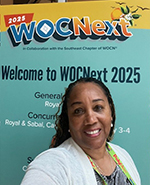
E. Lynette Gunn
Credentials: APRN, GCNS-BC, CWCN, CFCN
Present Employment: Self-Employed - Winds of Change - Lower Extremity and Wound Care
Muskogee, Oklahoma
Educational Background: MS in Nursing from University of Oklahoma; BSN from Washburn University, Topeka, KS; ADN from Connors State College, Warner, OK
Past and present positions/activities that reflect your leadership, marketing and strategic planning abilities:
My professional roles across the Indian Health Service and the Department of Veterans Affairs have consistently aligned with WOCNCB’s core competencies of leadership, strategic vision, certification advocacy, and advancing excellence in wound, ostomy, continence, and foot care. I have led multidisciplinary teams in both inpatient and outpatient settings, including serving as Chair of the Eastern Oklahoma VA Health Care System’s Pressure Injury Prevention Committee. In this role, I guided system‑wide policy updates, aligned practice with national VA standards, and facilitated collaboration across nursing, medicine, rehabilitation, and quality management. As Chief of Outpatient Nursing (Nurse IV), I continued to influence organizational priorities, mentor emerging leaders, and ensure that wound and foot care remained integrated into broader clinical operations. I founded and expanded the EOVAHCS Wound Care Program, transforming it from a single‑provider service into a comprehensive, sustainable program staffed by WOCNCB‑certified clinicians. This included long‑range planning, workforce development, and establishing a clinical model that elevated quality, safety, and access. I also launched VISN 19’s first TeleWound program, demonstrating strategic foresight and the ability to operationalize innovative care models for rural and underserved populations. Throughout my career, I have championed WOCNCB certification as the gold standard for wound and foot care practice. I actively mentored nurses pursuing certification, integrated WOCNCB standards into clinical protocols, and ensured that program expansion included certified clinicians to maintain excellence and credibility. I am currently the Chair of the marketing committee and have positively influenced the outreach to current certificants and potential certificants through Webinars, Booth attendance and seminar presentations.
If elected, what strengths and skills will you bring to a WOCNCB leadership?
I bring a combination of analytical thinking, creativity, and deep clinical insight that aligns directly with the mission and strategic priorities of the WOCNCB. One of my core strengths is my ability to listen actively and discern true practice innovation from temporary trends. This allows me to evaluate emerging technologies, products, and care models with a balanced, evidence‑based perspective—an essential skill for a certification board responsible for upholding national standards. I maintain strong clinical practice skills by attending conferences, engaging with specialty organizations, and collaborating with colleagues across multiple nursing disciplines. This cross‑specialty engagement is intentional; I believe WOC nursing must never become siloed. Our patients are medically complex, and they require clinicians who can negotiate across clinical, administrative, and industry domains to ensure they receive the right practitioner, the right products, and the right level of care for their wound, ostomy, continence, and foot care needs. I also bring strong communication and public‑speaking abilities, which I have used throughout my career to educate, advocate, and represent the specialty. My creativity is another key asset. I have collaborated with the marketing committee to design campaigns that highlight the value, credibility, and professional strength of being WOCNCB‑certified. I enjoy translating complex clinical concepts into compelling messages that resonate with both clinicians and the public. Above all, I bring passion—deep, sustained passion for the specialty and for the nurses who carry it forward. I am committed to advancing WOCNCB’s mission, strengthening the certification pipeline, and ensuring that our credential remains the gold standard for excellence in wound, ostomy, continence, and foot care.
What do you consider the most pressing issue for the WOCNCB in the next three years?
The most pressing issue facing the WOCNCB over the next three years is protecting the credibility and integrity of our certification. The rapid emergence of short‑course “certifications”—some requiring only one or two days of attendance—poses a direct threat to the rigor, reputation, and professional value of WOCNCB credentials. These offerings create confusion in the marketplace and risk diluting the meaning of true specialty preparation. It is imperative that we clearly and consistently communicate who we are, what distinguishes WOCNCB certification, and why our standards matter. The strength of our credential is built on depth of knowledge, clinical competency, and validated assessment—not attendance. Maintaining this distinction is essential not only for our professional identity but also for the trust placed in us by administrators, payors, industry partners, and government entities. When WOCNCB speaks, these stakeholders must recognize the authority behind the credential. To allow the credential to be cheapened would be devastating—not only to our brand, but to the patients who rely on highly trained WOC nurses to manage complex wound, ostomy, continence, and foot care needs. Our certification is both a product and a professional promise, and it must be protected with vigilance. Upholding the integrity of WOCNCB certification ensures that patients receive care from clinicians who are truly prepared, and it safeguards the future of our specialty.
What action should WOCNCB take to address the issue described above?
To protect the integrity of our credential and strengthen our national presence, the WOCNCB must prioritize visibility, collaboration, and public‑facing advocacy over the next several years. Continued and intentional visibility is essential—our certification must remain recognizable, respected, and clearly differentiated from emerging short‑course “certifications” that lack rigor.
One key action is to increase our presence at national and regional conferences, not only within wound, ostomy, continence, and foot care, but across broader nursing and interdisciplinary platforms. Speaking, exhibiting, and collaborating with other specialty organizations reinforces our authority and ensures our voice remains central in discussions about standards of care. We should also expand partnerships with high‑impact professional entities, including the United Ostomy Associations of America (UOAA), the American Diabetes Association (ADA), GI surgeons, and podiatry organizations. These groups serve patient populations that rely heavily on WOCNCB‑certified expertise. Strengthening these alliances elevates our visibility, enhances cross‑disciplinary trust, and reinforces the message that WOCNCB certification represents the highest level of specialty preparation. At the same time, we must embrace innovative, out‑of‑the‑box communication strategies to reach both clinicians and the public. Increasing our focus on public awareness—through campaigns such as “You Deserve a WOCNCB‑Certified Nurse”—positions our credential as a marker of safety, expertise, and quality. Patients are powerful advocates; when they understand the value of our certification, they help drive demand for certified clinicians. Ultimately, these actions strengthen our brand, protect the integrity of our credential, and ensure that WOCNCB remains the gold standard for wound, ostomy, continence, and foot care certification.
Kathy Khandaker (INCUMBENT), MSN, CNP, CWOCN
Bryan, Ohio
[View Bio]

Kathryn (Kathy) Khandaker / INCUMBENT
Credentials: MSN, CNP, CWOCN
Present Employment: Fulton County Wound Care and Hyperbaric Center/Program Director
Wauseon, Ohio
Educational Background: Master of Science in Nursing with Adult Nurse Practitioner, Ball State University; Wound education Medical University of South Carolina; Ostomy and Continence education WebWOC
Past and present positions/activities that reflect your leadership, marketing and strategic planning abilities:
My diverse professional background provides me with a unique perspective on leadership, marketing, strategic planning, and organizational development.
Since 2019, I have served on the Board of Directors for Compassion Medical Clinic, a 501(c)(3) free medical clinic in Bryan, Ohio. In this role, I oversee medical volunteers, contribute to the development and approval of marketing initiatives, and participate in the annual budgeting process. This experience has strengthened my leadership skills while providing valuable insight into nonprofit governance and strategic decision-making.
For the past four years, I have served on the Board of Directors of the Wound, Ostomy, and Continence Nursing Certification Board (WOCNCB), acting as liaison to both the Advanced Practice Committee and the Exam Preparation Committee. As a board member, I have been actively involved in strategic planning efforts that help shape the future direction of the certification board. I also contributed to revisions of the Professional Growth Program for Advanced Practice WOC Nurses, participated in vendor selection for website redesign initiatives, and engaged in discussions focused on expanding the number of certified nurses nationwide.
My service to the WOCNCB extends beyond my board responsibilities. I served on the Exam Committee for four years and subsequently chaired the committee for an additional three years. I have participated in several subcommittees related to the certification examination and was a member of the task force that established the initial standard-setting process for the Wound Treatment Associate–Certified (WTA–C) Program.
I was involved in the creation of the Partners in Practice Task Force for the Mideast Chapter of the Wound, Ostomy and Continence Nurses Society and continue to serve as an active member of that initiative.
Throughout my 23 years as a certified WOC nurse, I have practiced across the full continuum of care, including acute care, outpatient services, home health, long-term care, industry, and legal consulting. In addition to serving as a clinical instructor and guest lecturer, I have mentored numerous WOC nurses pursuing certification and continue to mentor wound care nurse practitioners and physicians who are new to the specialty.
My leadership experience also includes developing two wound, ostomy, and continence practices from the ground up. This involved recruiting and hiring staff, marketing the program, developing policies and procedures, and securing physician champions to support program growth and sustainability.
Currently, I serve as Program Director of a wound and hyperbaric center in Northwest Ohio, where I oversee clinical operations, program development, and strategic initiatives aimed at improving patient outcomes and advancing wound care services.
If elected, what strengths and skills will you bring to a WOCNCB leadership?
I elected I will bring my strong organizational skills, working knowledge of all aspects of wound, ostomy and continence practice as well as a high degree of professionalism to the board. I am currently employed in a management position as well as being a clinician. I know what it takes to be part of a team and I have the experience to lead when needed.
What do you consider the most pressing issue for the WOCNCB in the next three years?
It is my opinion that online learning, gamification of educational material and streamlining education leading to certification will be a big focus in the next 3 years. We are competing with several certifying organizations and need to continue to be up to date and progressive in our approach to certification. Of course, increasing the number of certified nurses is always a priority.
What action should WOCNCB take to address the issue described above?
The certification board will need to continue to think outside the box regarding recruiting new certificants as well as addressing the needs of those members that are recertifying. The board needs to consider a marketing plan that captures the nurses that are in the current workforce as well as those entering and addresses the complications of today’s medical field.
Mary Kinsey, BSN, RN, CWON
Spring, Texas
[View Bio]

Mary Kinsey
Credentials: BSN, RN, CWON
Present Employment: Wound Program Manager
The Woodlands, Texas
Educational Background: BSN from Grand Canyon University, current enrollment in dual MSN-MBA
Past and present positions/activities that reflect your leadership, marketing and strategic planning abilities:
Throughout my career, I have led and managed multiple inpatient and outpatient wound care and hyperbaric medicine programs. I believe that building strong, collaborative teams grounded in evidence-based practice is essential to program success. As a support group leader with the UOAA, I have integrated my passion for ostomy care into clinical practice by implementing quality improvement initiatives focused on continuity of care, discharge education, and transition planning. As a member of the Texas Nurses Association District 9 Scholarship Committee, I am committed to supporting educational opportunities that advance nurses' careers and strengthen the future of the profession through the selection of deserving scholarship recipients.
By aligning departmental objectives with organizational priorities and contributing to numerous quality improvement projects, I have improved key performance metrics while maintaining high standards of care. These efforts have helped reduce hospital-acquired pressure injuries, increase productivity, and strengthen referral networks through collaboration with nurses, providers, departments, campuses, and community healthcare partners.
If elected, what strengths and skills will you bring to a WOCNCB leadership?
If elected to WOCNCB leadership, I would bring not only clinical expertise, but also business acumen, strategic thinking, and a commitment to supporting and developing fellow nurses. I believe nurses should lead within their specialties to advance professional development, drive performance improvement, and foster innovative approaches that enhance patient outcomes.
What do you consider the most pressing issue for the WOCNCB in the next three years?
Over the next three years, one of the most significant challenges facing the WOCNCB will be demonstrating the value of the wound, ostomy, and continence nursing workforce. As healthcare organizations face increasing financial pressures, specialty programs are often vulnerable to workforce reductions. Equally concerning is the growing number of wound care clinicians who lack formal specialty training. Greater emphasis must be placed on competency, critical thinking, certification, and the measurable value wound, ostomy and continence nurses bring to patient care and organizational performance.
What action should WOCNCB take to address the issue described above?
I strongly advocate for developing business acumen within wound care teams. By quantifying the financial impact of preventing hospital-acquired pressure injuries, demonstrating revenue preservation, and building business cases for certified specialty teams, wound care leaders can strengthen organizational support while improving quality outcomes. The WOCNCB is uniquely positioned to address this gap by advancing initiatives that clearly communicate both the clinical and economic value of certified wound, ostomy, and continence nurses, ensuring the long-term sustainability and recognition of the specialty.
Kelly Mendello, MSN, AGACNP-BC, CWOCN-AP
Peekskill, New York
[View Bio]

Kelly Mendello
Credentials: MSN, AGACNP-BC, CWOCN-AP, OCN
Present Employment: Memorial Sloan Kettering Cancer Center, Colorectal/Gastric-Mixed Tumor Surgery Nurse Practitioner
Manhattan, NY
Educational Background: MSN, BSN
Past and present positions/activities that reflect your leadership, marketing and strategic planning abilities:
Throughout my career, I have consistently sought opportunities to contribute beyond direct patient care through leadership, education, quality improvement, and professional service within a large academic medical center.
At Memorial Sloan Kettering Cancer Center, I currently serve as Co-Lead of the APP Governing Council Optimization of Non-Clinical Time Committee, APP Representative on the Pressure Injury Prevalence Committee, a member of the APP Self-Care Committee, and a contributor to our surgical APP newsletter. These roles involve cross-disciplinary collaboration, strategic planning, stakeholder engagement, and implementation of initiatives aimed at improving both clinician experience and patient outcomes across inpatient surgical oncology services.
My prior leadership experience includes serving as Co-Chair of the APP Culture Group Education Pillar, Unit-Based Council Co-Chair, and Education Council Representative. In these roles, I helped identify clinical and organizational gaps, design structured solutions, and support implementation.
I am also actively involved in mentorship and professional development through the WOCN Society Membership Engagement Committee, the WOCN Mentor Match Program, the NYU Nursing Alumni Mentor Program, and precepting both nursing and nurse practitioner students.
A key focus of my work has been quality improvement in ostomy care, particularly reducing leakage and peristomal skin complications through evidence-based WOC interventions. This involved identifying a system-level problem, engaging stakeholders, reviewing evidence, and translating findings into practical workflow changes.
Across all of my roles, I operate at the intersection of clinical care, education, and systems improvement, with a focus on turning evidence into measurable and sustainable change.
If elected, what strengths and skills will you bring to a WOCNCB leadership?
If elected, I would bring a combination of advanced clinical expertise, systems thinking, and a strong commitment to advancing the WOC specialty.
As a CWOCN-AP and Adult-Gerontology Acute Care Nurse Practitioner in a high-volume academic surgical oncology setting, I care for complex patients while actively engaging in quality improvement, education, mentorship, and committee work. This allows me to bring a grounded, real-time perspective on how WOC care is delivered across inpatient systems today.
I am able to connect perspectives across bedside nurses, advanced practice providers, educators, and patients to support practical, system-level solutions. My experience as both a patient with ulcerative colitis and an ostomy, and later as an advanced practice WOC-certified clinician, continues to shape how I advocate for patients and approach care delivery.
I also bring a recent, firsthand understanding of the advanced practice certification journey, including the challenges clinicians face when entering and navigating this pathway.
Most importantly, I bring a deep commitment to service. WOC nursing has shaped both my personal and professional identity, and I would be honored to contribute to the continued growth, relevance, and strength of the WOCNCB and its certification programs as it continues to evolve the WOC specialty nationally.
What do you consider the most pressing issue for the WOCNCB in the next three years?
One of the most pressing issues facing the WOCNCB is the need to strengthen and sustain the advanced practice workforce within WOC nursing.
As a nurse practitioner who recently completed advanced practice WOC certification, I experienced firsthand how limited structured guidance and visibility can be when navigating this pathway. While certification pathways exist, there remains an opportunity to better define and support what advanced practice WOC roles look like in real-world practice across health systems.
At the same time, the field is facing an aging workforce and a limited pipeline of new clinicians entering WOC nursing. As healthcare systems increasingly rely on specialized wound, ostomy, continence, and foot care expertise, it is critical to strengthen both recruitment into the specialty and long-term professional development pathways.
What action should WOCNCB take to address the issue described above?
WOCNCB should take a coordinated approach focused on visibility, mentorship, and pipeline development.
First, earlier exposure to WOC nursing is essential to strengthen the pipeline into the specialty. Partnering with academic programs, clinical training sites, and professional organizations can help introduce students and early career nurses to the specialty sooner, when career direction is still forming.
Second, expanding structured mentorship pathways would provide meaningful support for clinicians entering and advancing within the specialty. Highlighting real-world career trajectories, especially advanced practice roles, would help make the pathway more tangible and accessible.
Third, increasing visibility of the impact of certified WOC nurses is important. Clearly demonstrating outcomes, quality improvements, and system-level contributions reinforces the value of certification and supports continued institutional investment in the specialty.
Finally, greater clarity around the advanced practice WOC pathway would strengthen recruitment and retention. In my experience, the pathway can feel fragmented without clear examples or guidance. Clear, defined models of advanced practice WOC roles would strengthen the pipeline and support the development of the next generation of clinicians entering the specialty.
Morgan Pyle, BSN, RN, CWOCN
San Antonio, Texas
[View Bio]

Morgan Pyle
Credentials: BSN, RN, CWOCN
Present Employment: Peterson Regional Medical Center
Kerrville, Texas
Educational Background: Texas Tech University, Emory University
Past and present positions/activities that reflect your leadership, marketing and strategic planning abilities:
I have assisted in developing hospital-wide Pressure Injury Prevention guidelines.
I lead the quarterly NDNQI Pressure Injury Prevalence studies and our quarterly Skin Champions meetings, demonstrating our commitment to quality and inspiring ongoing engagement among colleagues and supervisors.
I coordinate in-services with our nursing units and other clinical staff, emphasizing our collective effort to enhance patient care and staff development.
I create a Wound Talk flyer every other month for the Nursing Newsletter, aiming to support staff knowledge and confidence in wound care practices.
I am continuously working with my colleagues to improve our Wound/Ostomy department, including revising Policies, reviewing products, and creating documentation templates.
If elected, what strengths and skills will you bring to a WOCNCB leadership?
I enjoy working with others and strive to highlight my colleagues' strengths while appreciating the unique value each person brings.
What do you consider the most pressing issue for the WOCNCB in the next three years?
We need new WOCNs in all healthcare settings, but the need is most critical in rural and home health environments.
What action should WOCNCB take to address the issue described above?
Piggyback off what the United Ostomy Association of America and WOCN have already started, Back to Your Nursing Roots.
We could also offer CEUs through other nursing associations/societies to bring more awareness to the role of the WOCN.
Lori Rivet, BSN, MHA, RN, CWON
Mandeville, Louisiana
[View Bio]

Lori Rivet
Credentials: BSN, MHA, RN, CWON
Present Employment: Ochsner Health, Unit/Nurse Manager, Post-Operative Surgical Services & Inpatient Wound/Ostomy
New Orleans, Louisiana
Educational Background: Master of Healthcare Administration (MHA) Louisiana State University Shreveport (LSUS), Shreveport, Louisiana – August 2024; Bachelor of Science in Nursing (BSN) Southeastern Louisiana University, Hammond, Louisiana – December 1995
Past and present positions/activities that reflect your leadership, marketing and strategic planning abilities:
Throughout my nursing career, I have progressed from a bedside clinician to a nurse leader, with responsibilities spanning clinical operations, quality improvement, and strategic program development. In my current role as Unit Manager for Post-Operative Surgical Services and Inpatient Wound & Ostomy at Ochsner Health, I oversee inpatient wound and ostomy services across the acute care hospital and provide leadership across the continuum of care, including the acute care hospital, Ochsner Extended Care Hospital (LTAC), and an affiliated skilled nursing facility. I lead interdisciplinary teams and oversee clinical operations, staffing, quality, patient experience, and professional development, while advancing evidence-based wound care practices.
If elected, what strengths and skills will you bring to a WOCNCB leadership?
If elected to the WOCNCB Board of Directors, I would bring a combination of clinical expertise, collaborative leadership, and experience leading quality improvement and strategic initiatives within a large integrated health system. Throughout my career, I have worked to build consensus among interdisciplinary teams, translate evidence into practice, and develop sustainable processes that improve patient outcomes.
My strengths include strategic thinking, relationship building, and the ability to bring diverse stakeholders together to achieve shared goals. I have led initiatives focused on pressure injury prevention, standardization of clinical practice, product evaluation, staff education, and implementation of evidence-based programs. Through committee leadership and quality improvement work, I have learned to balance innovation with practical application while keeping the needs of patients, clinicians, and the profession at the forefront.
I also believe one of my greatest strengths is listening. I value different perspectives, seek collaboration, and enjoy mentoring others while continuing to learn myself. I would bring an engaged, thoughtful, and service-oriented approach to the Board and would be committed to supporting the WOCNCB's mission, its certificants, and the continued advancement of the WOC nursing profession.
What do you consider the most pressing issue for the WOCNCB in the next three years?
One of the most pressing issues facing the WOCNCB over the next three years is attracting, developing, and retaining the next generation of WOC nurses while ensuring certification continues to demonstrate its value in today's evolving healthcare environment.
Healthcare is experiencing workforce shortages, increasing clinical demands, and changing care delivery models. As experienced WOC nurses retire, it is essential that we inspire new nurses to enter the specialty by promoting the impact WOC nurses have on patient outcomes, quality improvement, and healthcare leadership. At the same time, we must continue to ensure that certification remains relevant, evidence-based, and recognized by healthcare organizations as a marker of clinical excellence.
I believe the WOCNCB has an important opportunity to support professional growth through strong certification standards, engagement with certificants, and continued collaboration with healthcare organizations. By investing in the future of the specialty while maintaining the high standards for which the WOCNCB is known, we can strengthen both the profession and the care we provide to patients.
What action should WOCNCB take to address the issue described above?
To address this challenge, I believe the WOCNCB should continue to strengthen awareness of the value of certification while actively engaging and supporting the next generation of WOC nurses. This includes partnering with employers, educational programs, and professional organizations to promote the specialty and demonstrate the impact certified WOC nurses have on patient outcomes, quality, and healthcare organizations.
I also believe mentorship and professional engagement are essential. Supporting newly certified WOC nurses through mentorship opportunities, networking, and ongoing educational resources can help strengthen retention and foster long-term commitment to the specialty.
Finally, the WOCNCB should continue to ensure that certification reflects current evidence-based practice and the evolving healthcare environment while maintaining the high standards that have established its credibility. By investing in both the profession and its certificants, the Board can help ensure a strong and sustainable future for WOC nursing.
Election
All WOCNCB certificants may vote in this open online election through August 31, 2026. You may only vote online and may only cast one ballot. We will post the election results after all ballots are tabulated. Candidates will be notified of election results prior to them being posted online.
Voting
The 2026 Election is open and all e-ballots may be cast through August 31, 2026. Each WOCNCB certificant is allowed to vote only one time and must select one (1) candidate.
To access the ballot form, click here.
Only WOCNCB certificants are eligible to vote.
If you have questions or are having any difficulties, please contact the WOCNCB office at 1-888-496-2622 or e-mail info@WOCNCB.org.